You don’t need to be an athlete to enjoy skiing, but if you’ve ever felt your legs burning halfway down the mountain, you know that a little preparation goes a long way. Skiing demands more from your body than you might think. Between absorbing bumps, making turns, navigating changing terrain, and getting back on the lift for another lap, your legs and core are working nearly nonstop.
The good news? You don’t need an expensive gym membership or an elaborate training program to get ready. A few weeks of consistent exercise can help build the strength, balance, and cardiovascular endurance you’ll need to ski comfortably and confidently.
This simple four-week plan is designed for recreational skiers of all fitness levels. The goal isn’t to become a professional athlete before opening day. It’s to make those first few days on snow more enjoyable, reduce fatigue, and give your body a better foundation for the season ahead.
As always, talk to your doctor before starting a new exercise program, particularly if you have existing injuries or health concerns.
What Muscles Does Skiing Actually Use?
Skiing is a full-body activity, but a few muscle groups do much of the heavy lifting.
Quadriceps: Your quads are constantly working to support your weight, absorb terrain, and maintain a strong athletic stance. They’re often the first muscles to remind you that you haven’t skied in a while.
Glutes and hamstrings: These muscles help stabilize your hips, control movement, and generate power through turns.
Core: Your abdominal and lower-back muscles help maintain balance, stabilize your upper body, and keep your movements controlled as your legs move underneath you.
Calves and ankles: These help manage pressure through your boots and maintain balance as you move through turns and changing terrain.
Cardiovascular system: Skiing involves repeated bursts of effort, recovery on the chairlift, and more effort on the next run. Building endurance helps you maintain energy throughout the day.
The secret is developing a combination of strength, muscular endurance, balance, and cardiovascular fitness.
Weeks 1 and 2: Build Your Foundation
The first two weeks are about waking up the muscles you’ll use most on the mountain. Focus on controlled movements, good technique, and consistency rather than trying to do as many repetitions as possible.
Aim for two to three strength sessions per week, with at least a day of recovery between harder workouts.
1. Bodyweight Squats

Squats build strength in your quads, glutes, and hips while helping develop the lower-body endurance needed to maintain a skiing stance.
Start with 2 sets of 10–15 repetitions.
Keep your feet about shoulder-width apart.
Lower yourself as if sitting in a chair, keeping your knees aligned with your toes.
Stand back up slowly and with control.
2. Forward or Reverse Lunges
Lunges develop individual leg strength and stability, both important when shifting weight between skis.
Start with 2 sets of 8–10 repetitions per leg.
Take a comfortable step forward or backward.
Lower your body until both knees are bent, keeping your front knee aligned over your foot.
Push back to your starting position.
3. Planks
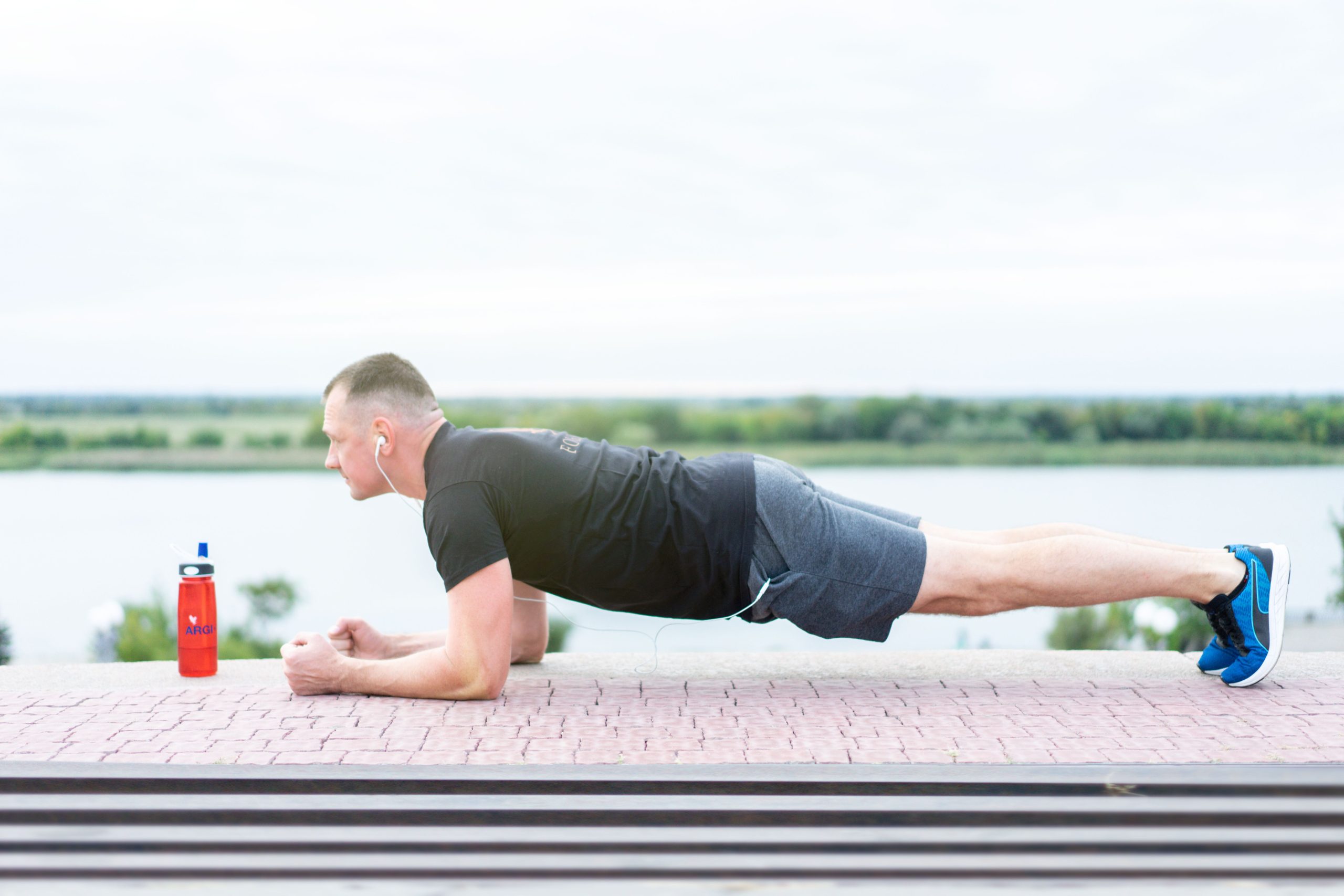
A strong core helps you maintain balance and control your upper body while your legs navigate the terrain.
Start with 2–3 sets of 20–30 seconds.
Keep your body in a straight line from shoulders to heels.
Avoid letting your hips sag.
If a full plank is too difficult, start on your knees and gradually work toward 60-second holds.
4. Cardio: Build Your Engine
Skiing isn’t just about leg strength. Cardiovascular fitness helps you recover between runs and maintain energy throughout the day.
Walk briskly, jog, cycle, or use an elliptical.
Aim for 20–30 minutes, twice per week.
Start at a comfortable pace and gradually increase your effort.
Weeks 3 and 4: Build Strength, Balance and Ski-Specific Fitness
Now that you’ve established a foundation, it’s time to introduce movements that more closely resemble what your body does on the mountain.
Continue your strength sessions and begin adding the following exercises.
1. Wall Sits
Wall sits are one of the simplest ways to build muscular endurance in your quadriceps.
Start with 2–3 holds of 20–30 seconds.
Place your back against a wall and slide down until your knees are comfortably bent.
Keep your feet flat and your knees aligned with your toes.
Gradually work toward 45–60-second holds.
2. Lateral Lunges
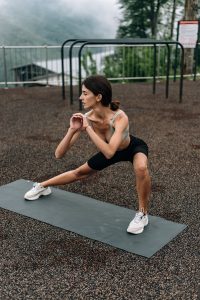
Skiing involves constant side-to-side movement. Lateral lunges help develop strength in the hips, glutes, and inner and outer thighs.
Start with 2 sets of 8–10 repetitions per side.
Step out to one side, bending that knee while keeping the opposite leg relatively straight.
Push through your bent leg to return to the starting position.
Keep your movements controlled.
3. Single-Leg Balance
Balance is an underrated part of skiing. Being able to stabilize yourself on one leg helps develop the coordination and control needed to manage uneven terrain and changing conditions.
Stand on one foot for 20–30 seconds.
Repeat on the opposite leg.
Complete 2–3 rounds per side.
As you improve, try slight knee bends or balancing on a less stable surface.
4. Skater Hops
This exercise introduces lateral movement and helps develop coordination and lower-body power.
Start with small, controlled hops from one foot to the other.
Land softly, bending your knee to absorb the impact.
Start with 2 sets of 8–10 hops per side.
Focus on balance and control before increasing distance or speed.
5. Add Some Plyometrics
If you’re already comfortable with basic strength exercises and have no joint or balance limitations, introduce a little explosive movement.
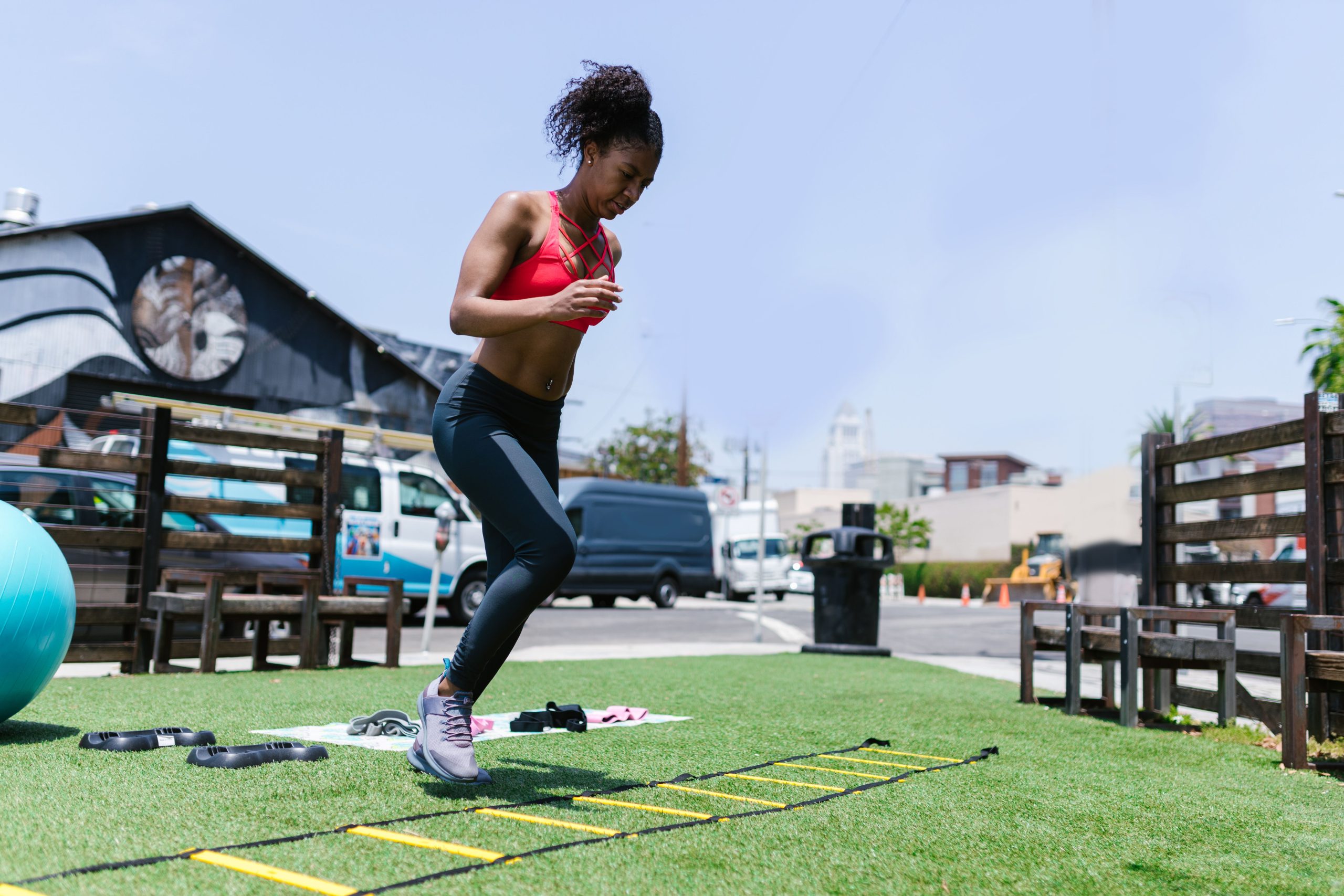
Think ladder drills, low box jumps, or small two-footed jumps. These exercises develop power and coordination while introducing the repeated flexion and extension your legs experience while skiing.
Start conservatively with 1–2 sets of 5–8 repetitions. Prioritize soft landings and good technique over height or speed. Plyometrics are optional, not a requirement for enjoying the mountain.
6. Increase Your Cardio
By now, try adding one longer cardiovascular session each week.
Aim for 30–45 minutes of walking, cycling, jogging, or hiking.
Keep a pace that allows you to maintain a conversation.
If you’re comfortable, introduce a few short intervals of increased effort followed by easier recovery periods.
The goal is to build enough endurance that your legs and lungs aren’t completely exhausted before lunchtime.
Don’t Forget Recovery
It’s tempting to think that more exercise automatically means better results, but recovery is just as important as the workout itself.
A few simple habits can make a difference:
Stretch: Spend 5–10 minutes after exercising focusing on your quads, hamstrings, calves, hips, and glutes.
Hydrate: Drink water throughout the day, especially after longer workouts.
Sleep: Your muscles need time to recover and adapt to training.
Take rest days: Give your body a break between harder strength sessions.
Don’t overdo it: Consistency beats an overly ambitious workout that leaves you sore or injured.
And remember, your first day back on snow doesn’t have to be a race to the bottom. Start on terrain that matches your ability, take breaks, and gradually build your mileage.
Why Your First-Day Ski Lesson Is Worth It
Even experienced skiers can benefit from a little guidance after time away from the mountain. A professional instructor can help you get your technique dialed in, identify habits that may be creating unnecessary fatigue, and ease you back into skiing at a comfortable pace.
If you’re new to skiing, a lesson is even more valuable. Learning proper technique early can help you progress faster, build confidence, and enjoy more of your time on the mountain. A ski lesson can also help you ski more efficiently and last longer.
Not sure what to look for when hiring an instructor or outdoor guide? Check out our guide to the questions every adventurer should ask before booking a guide.
Frequently Asked Questions About Getting in Shape for Ski Season
How early should I start preparing for ski season?
Ideally, start four to six weeks before your first day on snow. That gives you enough time to build strength and endurance gradually. Even two weeks of consistent preparation can make a noticeable difference compared to doing nothing.
Do I need to go to the gym to prepare for skiing?
Not at all. Bodyweight squats, lunges, planks, wall sits, and balance exercises can all be done at home. Walking, cycling, and hiking are excellent ways to build cardiovascular endurance without special equipment.
What is the best exercise for skiing?
There isn’t one magic exercise. Squats, lunges, wall sits, and single-leg exercises are all excellent starting points because they target the muscles and movements used in skiing. Combining strength work with cardio and balance training is the best approach.
How many days a week should I work out before ski season?
Aim for two to three strength sessions and two cardiovascular sessions per week. You can combine shorter cardio sessions with strength workouts, but make sure to allow time for recovery.
Will getting in shape prevent ski injuries?
Being physically prepared can improve strength, balance, coordination, and endurance, all of which may help you manage the physical demands of skiing. However, no exercise program can eliminate injury risk. Proper technique, appropriate terrain choices, equipment, and knowing when to call it a day are equally important.
Find Your Pro. Find Your Mountain.
Getting ready for ski season is about more than stronger legs. It’s about making the most of your time outside, building confidence, and enjoying more days on the mountain.
Follow your favorite resort on MEETR for storm alerts, local instructors, and mountain updates. Looking to turn your passion for the outdoors into a profession? If you’re a ski instructor, fly fishing guide, climbing guide, or outdoor professional, claim your free MEETR profile.
MEETR is a marketplace for finding outdoor guides and instructors. Search by discipline and location, see the professional before you book, and plan your day with someone who knows the country you’re standing in. Find your pro at meetr.pro.

 390 Hollyberry Lane...
 10000 Schweitzer Mountain Rd, ...
 Winthrop, Washington, United S...
 160 Magee Road, Ringwood, NJ, ...
 Breckenridge, CO...